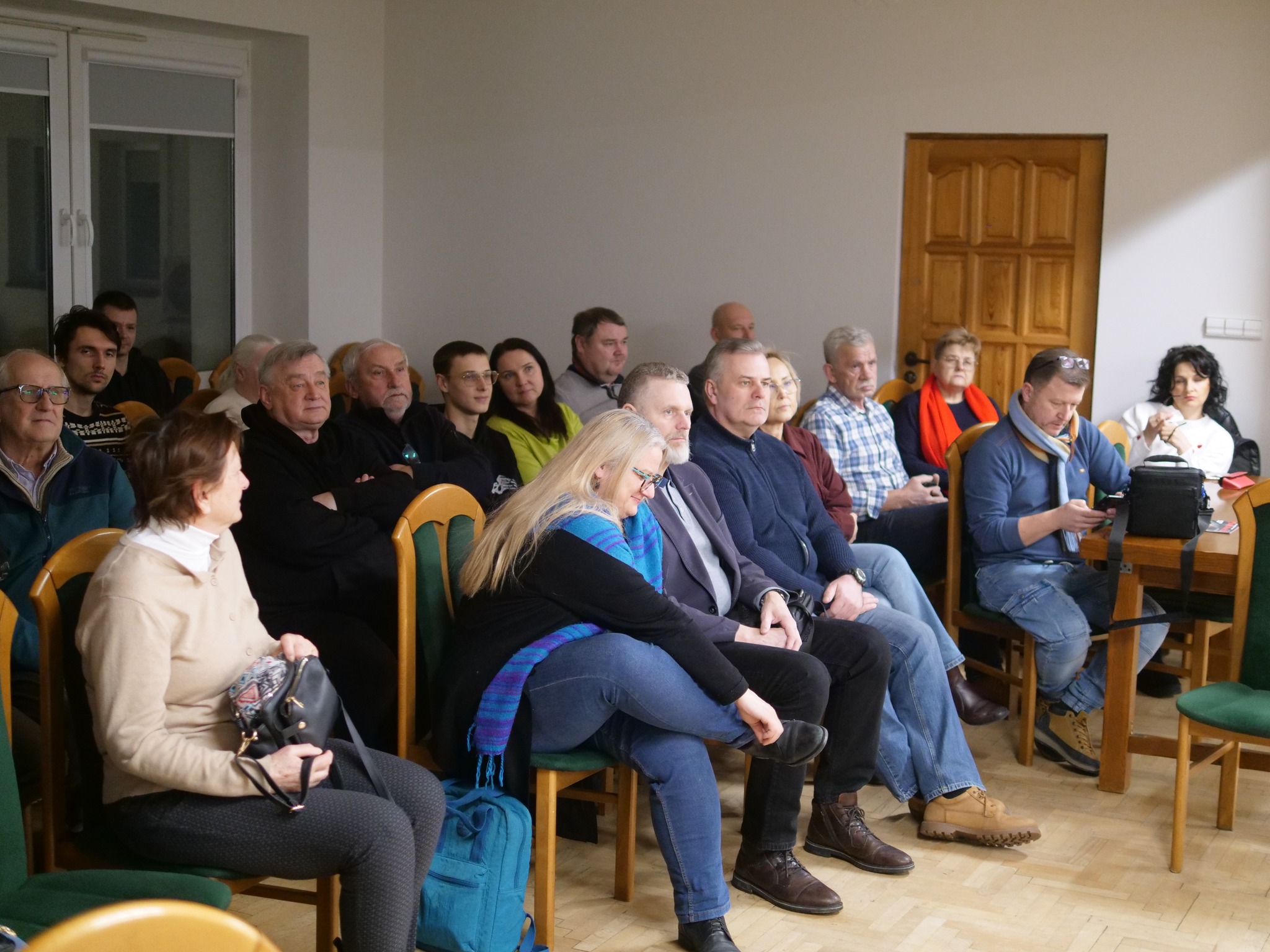
W piątkowy wieczór 23 I 2026 r. w sali gminnej w Czosnowie zebrało się blisko pięćdziesiąt osób – znacznie więcej, niż ktokolwiek spodziewał się jeszcze kilka dni wcześniej. Tematem spotkania była idea utworzenia archiwum społecznego Gminy Czosnów. Czy rosnąca frekwencja i entuzjazm mieszkańców nie są najlepszym dowodem, że lokalna pamięć historyczna przeżywa dziś prawdziwy renesans?
Spotkanie otworzyła wójt Anna Maliszewska. Wyraziła wdzięczność za tak liczne przybycie i zapewniła, że gmina udzieli inicjatywie wsparcia organizacyjnego i logistycznego. – Bardzo cieszy mnie, że mieszkańcy sami chcą ratować i porządkować swoją przeszłość – powiedziała.
Następnie głos zabrał Adam Łyszkowski, jeden z głównych inicjatorów projektu. Przedstawił założenia archiwum społecznego i zadeklarował, że przekaże na jego potrzeby własne zbiory – zarówno dokumenty, jak i bogatą galerię archiwalnych fotografii związanych z Twierdzą Modlin oraz terenem dzisiejszej gminy. Uczestnicy mogli na własne oczy zobaczyć, jak wiele unikatowych materiałów udało się już zgromadzić.
Edward Koral opowiedział o historii swojej rodziny osiadłej od pokoleń w Kazuniu. Polecił przy tym książkę „Wydziedziczeni” pióra Danuty Koral – publikację, która szczegółowo opisuje losy rodu oraz samej miejscowości na przestrzeni ostatnich stuleci.
Na zakończenie głos zabrała Maria Kamińska reprezentująca Muzeum – Miejsce Pamięci Palmiry. Gratulowała pomysłu utworzenia archiwum społecznego i jednocześnie zwróciła się z apelem o przekazywanie wszelkich informacji dotyczących początków i budowy placówki w Palmirach. – Każde wspomnienie, fotografia czy list mogą mieć ogromną wartość – podkreśliła.
Organizatorzy wystąpili z otwartym apelem do wszystkich mieszkańców i sympatyków historii. Poszukiwane są stare fotografie, metryki, listy, dokumenty wojskowe, wspomnienia pisane, pocztówki, mapy – wszystko, co dotyczy przeszłości Gminy Czosnów. Materiały zostaną zeskanowane, opisane i – po uzyskaniu zgody właścicieli – udostępnione online oraz w formie wystaw i publikacji. Celem jest ocalenie ich od zniszczenia i zapomnienia oraz stworzenie wspólnej, dostępnej bazy lokalnego dziedzictwa.
Kontakt z organizatorami: lgizinski@czosnów.pl lub poprzez profil „Historia Gminy Czosnów” na portalu społecznościowym.
Leszek Giziński, jeden z koordynatorów przedsięwzięcia, nie krył zaskoczenia i radości: – Liczyliśmy na kameralne spotkanie kilku osób. Tymczasem przyszło blisko 50 uczestników, co bardzo nas ucieszyło. Na kolejne spotkania przygotujemy jeszcze więcej archiwalnych fotografii, bo cieszą się ogromnym zainteresowaniem.
Już teraz zapowiadane są kolejne wieczory historyczne – tym razem z jeszcze bogatszą częścią wizualną i nowymi prelegentami. Czy uda się stworzyć w Czosnowie prawdziwe „ludowe archiwum”, które będzie wzorem dla innych małych ojczyzn?
What Can Save Memory from Oblivion?
On the Friday evening of January 23, 2026, nearly fifty people gathered in the municipal hall in Czosnów – far more than anyone had expected just a few days earlier. The topic of the meeting was the idea of establishing a community archive for the Czosnów Municipality. Does the growing attendance and enthusiasm of the residents not provide the best proof that local historical memory is experiencing a true renaissance today?
The meeting was opened by Mayor Anna Maliszewska. She expressed gratitude for such a large turnout and assured that the municipality would provide organizational and logistical support for the initiative. “I am very pleased that the residents themselves want to save and organize their own past,” she said.
Next, Adam Łyszkowski, one of the main initiators of the project, took the floor. He presented the assumptions of the community archive and declared that he would donate his own collections for its needs – both documents and a rich gallery of archival photographs related to the Modlin Fortress and the area of today’s municipality. Participants could see with their own eyes how many unique materials have already been gathered.
Edward Koral spoke about the history of his family, settled for generations in Kazuń. He also recommended the book “Wydziedziczeni” by Danuta Koral – a publication that details the fate of the family and the locality itself over the past centuries.
At the end, Maria Kamińska, representing the Museum – Palmiry Memorial Site, took the floor. She congratulated the idea of creating a community archive and at the same time appealed for any information concerning the origins and construction of the facility in Palmiry. “Every memory, photograph, or letter can be of enormous value,” she emphasized.
The organizers issued an open appeal to all residents and history enthusiasts. They are seeking old photographs, certificates, letters, military documents, written memoirs, postcards, maps – anything related to the past of the Czosnów Municipality. The materials will be scanned, described, and – with the owners’ consent – made available online as well as in the form of exhibitions and publications. The goal is to save them from destruction and oblivion and to create a shared, accessible base of local heritage.
Contact with the organizers: lgizinski@czosnów.pl or via the “Historia Gminy Czosnów” profile on the social media platform.
Leszek Giziński, one of the coordinators of the undertaking, did not hide his surprise and joy: “We were counting on a small meeting of a few people. Meanwhile, nearly 50 participants came, which delighted us very much. For the next meetings we will prepare even more archival photographs, because they enjoy enormous interest.”
More historical evenings are already being announced – this time with an even richer visual part and new speakers. Will it be possible to create a true “people’s archive” in Czosnów that will serve as a model for other small homelands?