
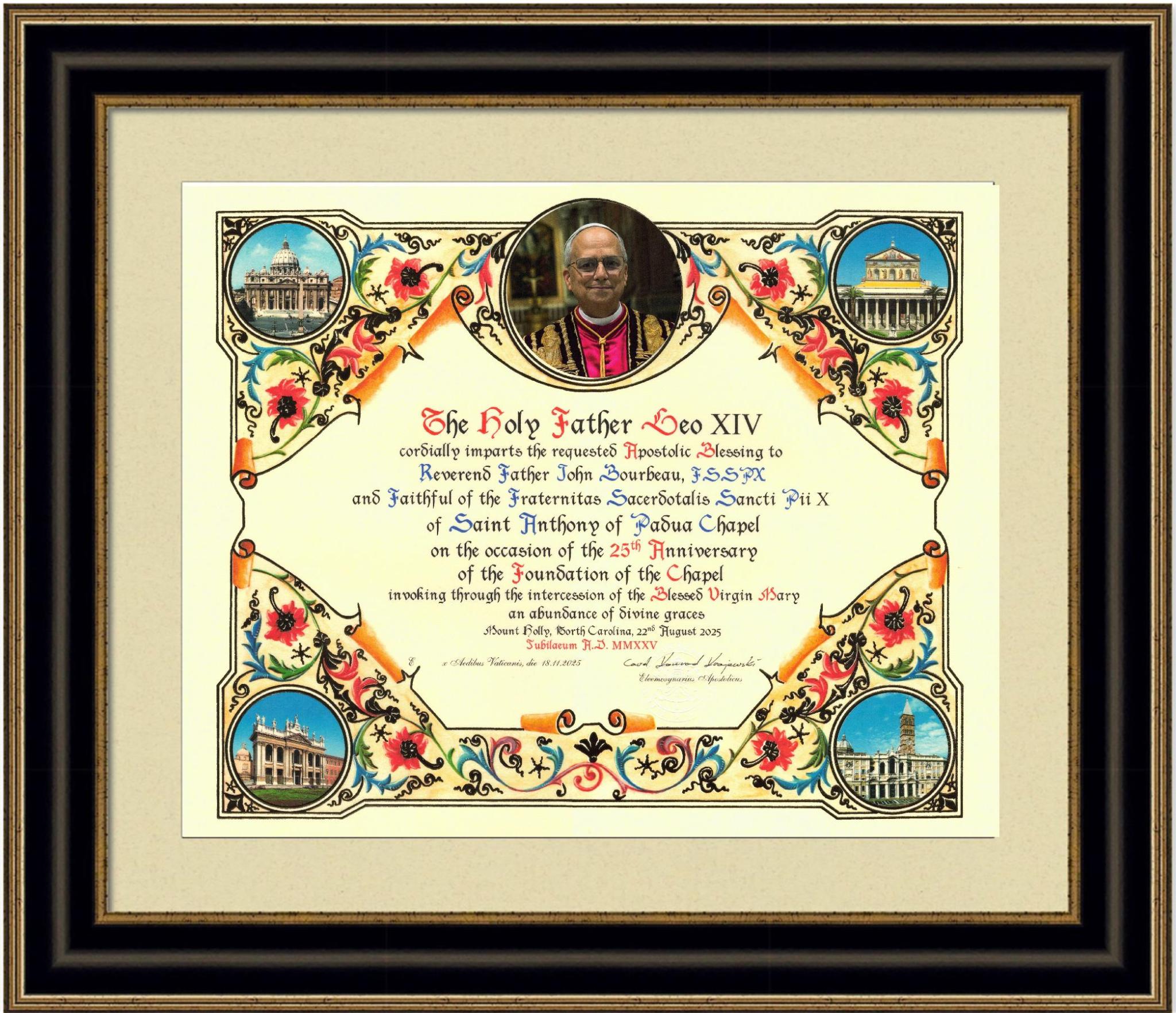
Wierni kaplicy św. Antoniego z Padwy w diecezji Charlotte ogłosili otrzymanie Błogosławieństwa Apostolskiego udzielonego przez papieża Leona XIV. Dokument, podpisany 18 XI 2025 r. w Watykanie przez kard. Konrada Krajewskiego, stał się dla wiernych wydarzeniem o znaczeniu symbolicznym. Podkreślono w nim prośbę o obfitość łask za wstawiennictwem Najświętszej Maryi Panny z okazji XXV rocznicy założenia kaplicy.
Historia kaplicy św. Antoniego pokazuje, jak przez lata rozwijała się wspólnota wiernych korzystających z posługi kapłanów FSSPX. Przez dziewiętnaście lat przed zakupem obecnego budynku w 2000 r. Msza była odprawiana w przestrzeniach wynajmowanych lub udostępnianych. Najpierw korzystano z prywatnego domu, później z pustej powierzchni na drugim piętrze budynku banku, a następnie z obiektu należącego do Junior League of Charlotte. Przełom nastąpił wiosną 2000 r., gdy John McMahon zauważył na swojej trasie kościół wystawiony na sprzedaż i powiadomił Jima De Piante. Ten z kolei skontaktował się z ks. Kennethem Novakiem z FSSPX. Po oględzinach i negocjacjach osiągnięto porozumienie, a pierwszą Mszę odprawiono 22 VIII 2000 r., w święto Niepokalanego Serca Maryi.
Pierwszy ołtarz był jedynie stołem opartym na krzesłach. Wkrótce wykonano konfesjonał, a następnie sprowadzono z jednej z diecezji na Środkowym Zachodzie drewniany ołtarz wraz z wnękami na figury. Po pracach renowacyjnych odprawiono na nim pierwszą Mszę w Wielki Czwartek 2001 r. Mężczyźni ze scholi zbudowali chór, a dom znajdujący się na terenie posesji przekształcono w plebanię i sale katechetyczne. W 2007 r. powiększono prezbiterium, a kolejne prace pozwoliły dodać cztery rzędy ławek. Dolną kondygnację urządzono jako salę parafialną. Wyremontowano również dzwon i wieżę, przywracając im sprawność. Lata pracy i nakładów wiernych uczyniły z tego miejsca przestrzeń, której nadano charakter odpowiadający tradycyjnej liturgii.
Po zakończeniu pielgrzymki przedstawiciele wspólnoty odwiedzili watykańskie biuro Papieskiej Jałmużnicy (Elemosineria Apostolica), gdzie złożyli pisemną prośbę o błogosławieństwo dla kaplicy z okazji rocznicy. Informacja o pozytywnym rozpatrzeniu wniosku została przyjęta z ogromną radością. Jak przypomniano, choć takie błogosławieństwa mają charakter rutynowy, nie są udzielane automatycznie. Konieczna jest akceptacja instytucji, a sam dokument sporządzany jest kaligraficznie, z przeznaczeniem do publicznego wyeksponowania.
Wspólnota podkreśliła, że fakt otrzymania takiego błogosławieństwa w diecezji nieprzychylnej tradycji stanowi wyraźny znak przywiązania wiernych do Kościoła i następy św. Piotra. Dokument ma dla nich wartość nie tylko uroczystą, lecz także świadczącą o ich synowskiej lojalności wobec Stolicy Apostolskiej.
Dla nas najbliższym terytorialnie kościołem, gdzie posługę pełnią kapłani FSSPX jest Warszawa-Radość przy ul. Gancarskiej 32. Jest to świątynia, w której wszystkie sakramenty są sprawowane według norm tradycyjnych.
Blessing that spoke loudly
The community of St. Anthony of Padua Chapel in the Charlotte Diocese announced that it had received an Apostolic Blessing granted by Pope Leo XIV. The document, signed at the Vatican on November 18, 2025, by Cardinal Konrad Krajewski, invoked abundant graces through the intercession of the Blessed Virgin Mary on the occasion of the chapel’s twenty-fifth anniversary.
The history of St. Anthony’s shows how the faithful served by priests of the SSPX gradually built their place of worship. For nineteen years before acquiring the present chapel in 2000, Mass was offered in borrowed or rented locations. First they met in a private residence, later in unused office space on the second floor of a bank building, and finally in a facility owned by the Junior League of Charlotte. A turning point came in the spring of 2000, during the Great Jubilee, when John McMahon noticed a church building for sale and informed Jim De Piante. Mr. De Piante contacted Father Kenneth Novak, SSPX, and after viewing the property and concluding negotiations, the community moved in. The first Mass was celebrated on August 22, 2000, the Feast of the Immaculate Heart of Mary.
The first altar was only a table propped on chairs. A confessional was soon built. Father Novak located a wooden altar and statue niches for sale in the Midwest. After restoration, the first Mass on the new altar was celebrated on Holy Thursday 2001. Members of the schola built a choir loft. The house on the property was renovated into a rectory with classrooms. In 2007 the sanctuary was expanded, and additional interior renovations allowed the installation of four more rows of pews. The lower floor was transformed into a parish hall. The bell and tower were restored. Through these efforts the faithful shaped the property to suit the traditional liturgy.
The path to the Apostolic Blessing began in the summer of 2025, during the current Jubilee Year. Hundreds of priests and religious of the SSPX, together with thousands of faithful, went on pilgrimage to Rome, processing through the streets and through the Holy Doors of the four Patriarchal Basilicas while publicly professing the Creed. A delegation from St. Anthony’s joined the pilgrimage. The coincidence of the chapel’s twenty-fifth anniversary with the Jubilee Year made the journey especially significant.
After the pilgrimage, representatives of the chapel visited the Office of Papal Charities (Elemosineria Apostolica) to submit a written request for a blessing for the anniversary. News that the petition had been granted was received with great joy. While such blessings are routine, they are not automatic: institutions must be approved, and the document is prepared in calligraphic form for public display.
The community noted that receiving such a blessing in a diocese unfriendly to tradition is a sign of its filial love for the Holy Father and for the Catholic Church as a whole. The document now stands as a public testimony of this attachment.


